Growing up, my father worked full-time whereas my mother was primarily a stay-at-home parent, later taking on part-time work as my sister and I grew older. My father’s routine was straightfoward: he would come home from work, enjoy dinner with the family prepared by my mother, play with us, and watch TV.
As an academic, I am granted a sabbatical every seven years–a six-month paid break from teaching and service duties to focus on research, crucial for tenure and promotion. The ideal sabbatical might mirror my father’s routine: research from 9 to 5, come home to a prepared dinner, play with the children, watch TV, and sleep.
With three sabbaticals under my belt, none came close to this model. This was in large part because I thought of myself as modeling both my mother and father. Instead of thinking only about my research, I have been combining research and care in each sabbatical.
Sabbatical #1: Barcelona with Toddler (Spring 2009)
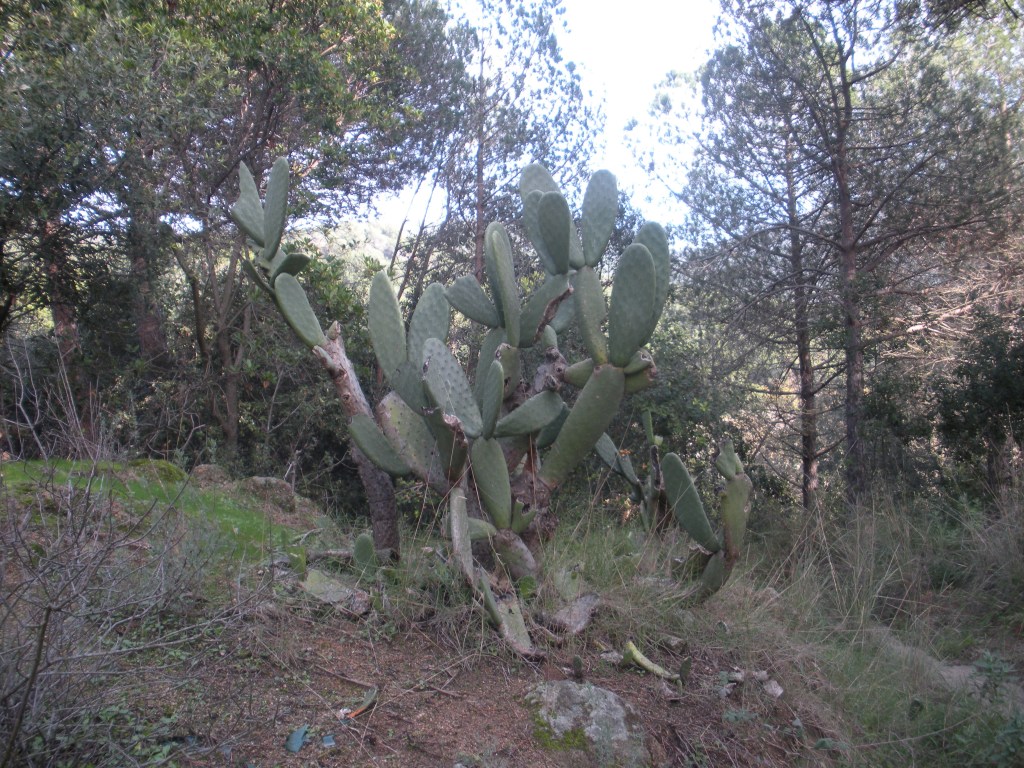
Hiking trails close by.
My first sabbatical in Barcelona coincided with my husband’s. We stayed with my in-laws, bringing our 18-month-old along. Since I hadn’t published anything substantial at that point, I felt a lot of pressure to do good work. However, numerous obstacles arose, and I remember feeling constantly frustrated.
Conducting research in a foreign country presented unexpected logistical challenges. I lacked essential books and primary sources crucial to my work. Not until a third of the way into my sabbatical did I manage to acquire some necessary materials through Amazon Spain and other sources. In addition, the VPN connection to my university’s network was frustratingly slow, making it time-consuming to access materials stored on the university’s hard drive.
Although I was affilliated with a local institute (IBEI) and was provided an office, I couldn’t fully take advantage of this opportunity. The institute was located over an hour away, making the commute prohibitively long. As a result, I visited only a few times each month and failed to establish meaningful connections with colleagues there.
One might assume that enrolling a child in daycare would solve all childcare issues, allowing a parent to work uninterrupted like my father did. However, the reality proved quite different.
My son frequently fell ill due to exposure to unfamiliar germs, often for extended periods. Moreover, Spain’s numerous holidays meant that daycare was closed more often than we anticipated. As a result, my son was unable to attend daycare for at least one-third of our time there.
In addition, dropping my son off at daycare took one hour and picking him up took one hour, taking into account the drive and the time needed to find parking and to drop off/pick up our son.
Despite my husband sharing childcare responsibilities, my research time remained limited and unpredictable. My current research indicates that extended families in Taiwan and Spain often assist with childcare, but this wasn’t our experience. However, we were fortunate to have significant help from my in-laws’ live-in domestic worker who cooked meals and helped clean our room. She was an enormous help in terms of cooking, household chores, and keeping us healthy. She enabled family dinner conversations filled with laughter without the concern of preparation or cleanup.
Even though I felt daily frustration about making progress on my research, my memory of this sabbatical is painted in vivid colors. The weather was nearly perfect; I could view both mountains and the Mediterranean Sea; and I spent precious time with family.
Sabbatical #2: The Year of Half Days (2016–17)
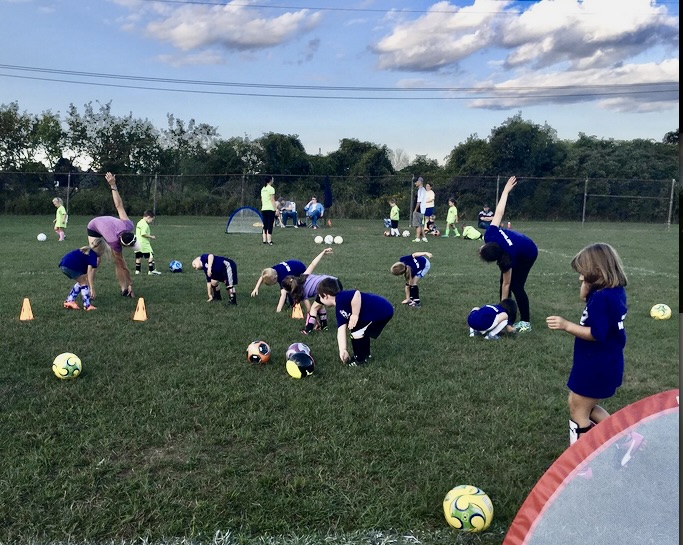
Here I am on the right, stretching, while my daughter examines my sneakers.
For my second sabbatical, I chose a full year at half pay. My children were in pre-K and fourth grade, and I had achieved tenure, which alleviated the pressure to publish. I opted not to use daycare or after-school care.
This decision created unique challenges. My daughter’s pre-K ended at 10:40 am everyday, requiring me to fly out of my office by 10:25 am on the days I was responsible for pick-up. I would also try to get some work done during my daughter’s nap in the afternoon.
The school calendar also had several holidays and half days that disrupted my rhythm of doing research. On several half days, my daughter would have no school because the afternoon pre-K would shift to the morning.
My father never had to concern himself with these school day irregularities or sick days.
Looking back, I struggle to recall significant progress during this period. Personal health issues compounded the challenges, as I threw out my back and was in pain for several months. Unlike my vibrant memories of the Spain sabbatical, I recall this year as somewhat gray.
On the plus side, my son was not reading well at the beginning of fourth grade as he was still reading picture books. I spent time with him on reading and writing. By the end of fourth grade, he became an avid reader, especially of the Harry Potter series.
The Turning Point: When School Schedules Align
Following this sabbatical, a significant change occurred in my family’s schedule: my daughter started kindergarten, which meant both children were in school “full-time” from 8 am to 2:30 pm. I felt that my research finally took off. I remember thinking that I achieved more research in the year after taking the sabbatical. This newfound consistency allowed me to finally complete my book in 2021.
Sabbatical #3: Taiwan, Home, and the Ermegence of a Research Rhythm (2023-24)

Sun Moon Lake, Taiwan || Eclipse in Upstate New York
I am currently finishing up my third sabbatical. Hands down, it has been the most enjoyable, though still not achieving the “ideal” work schedule. I chose a research topic that combined family and research, spending half the time in Taiwan on a US Fulbright Senior Scholar grant and the other half at home, with a brief stay in Spain.
In Taiwan, I was the sole caregiver for my two children. This meant managing meals, grocery shopping on foot, and being the primary contact for school-related activities. I outsourced laundry and had weekly cleaning help. My teenage son was tasked with dishwashing, though I often found it easier to do myself.
Once the children left for school at 7:45 am, I typically had uninterrupted time until 3:30 or 4 pm. Initially, I was hesitant to leave my 10-year-old alone in our rented apartment, which limited my ability to attend meetings or events during her out-of-school hours. We did face one crisis when my daughter forgot her apartment key while I was an hour away, but she managed to resolve the situation with help from her school and a neighbor.
Fortunately, my children rarely missed school due to illness, with only a brief two-day absence for my daughter due to an allergic reaction. On holidays, I took the opportunity to go sightseeing with my children. My research, focused on conducting interviews, didn’t require extensive access to books, which simplified my work process.
This productive pattern continued when I returned home in January. With my husband teaching, I often had from 8 am to 2:30 pm to myself on weekdays. This period from February to June was not only the most relaxing of my 19-year academic career but also highly productive – I wrote 25,000 words. However, this time still included interruptions such as a nine-day winter break, an eleven-day spring break, occasional child illnesses, appointments, and other school days off.
The Sabbatical Paradox
Reflecting on my three sabbaticals, I notice an ironic progression. During my first two sabbaticals, when childcare demands were most intense, I was also under significant career pressure – working towards tenure and then full professorship. Paradoxically, it was during my most recent sabbatical, after I had already achieved full professorship, that I finally experienced the most uninterrupted research time.
This progression does not make sense from a career development standpoint. Ideally, one would have more time for focused research earlier in their career when the stakes for advancement are higher.
While more women are succeeding in academia as compared to previous generations, there has not been a commensurate development of support structures to help manage household tasks and caregiving responsibilities. Furthermore, the burden of mental energy required to balance work and family often falls disproportionately on mothers.
Looking ahead, it is tempting to imagine that my fourth and fifth sabbaticals will achieve the mythical ideal. However, I realistically anticipate new caregiving responsibilities: potentially for aging parents during the fourth sabbatical and possibly grandchildren during the fifth.
This ongoing balance of research and care work stands in stark contrast to the experiences of male academics from previous generations. A quick glance at book acknowledgments from the 1950s, 60s, and 70s reveals how these scholars were largely exempt from caregiving duties. Today, care work remains a constant consideration for academic mothers, and increasingly, for academic fathers as well.
